
Why YSIIC?
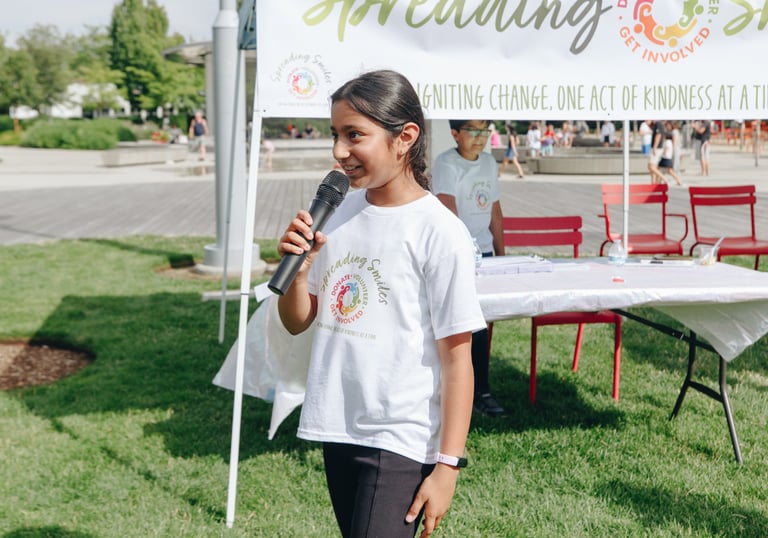
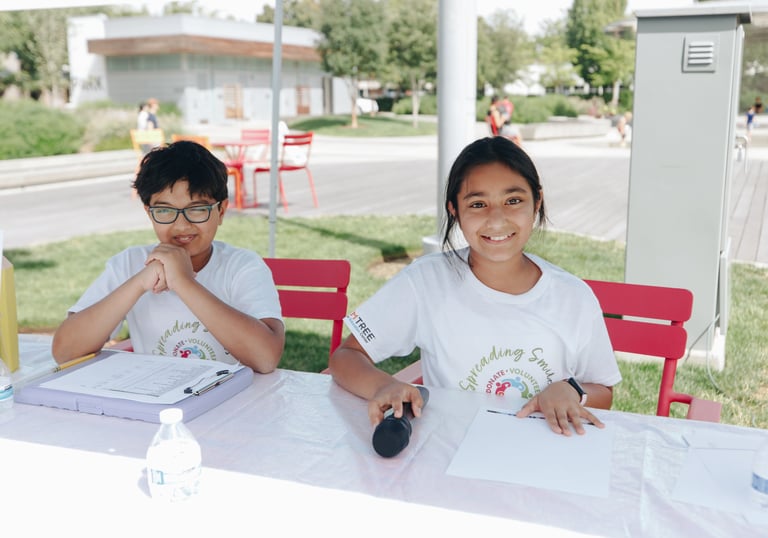
The Spreading Smiles Youth Social Impact Innovation Challenge is a one day, in person leadership and innovation experience where middle and high school students turn meaningful ideas into real world solutions.
Students gain hands on experience in teamwork, structured problem solving, ethical leadership, and public presentation. Working in teams, they identify a real community or social issue, design a practical and realistic solution, and present their idea in a professional showcase setting.
Participants build confidence, strengthen collaboration skills, think critically, and learn how to responsibly use modern tools including artificial intelligence. This is leadership in action, where creativity meets impact.
Want to learn more about YSIIC?
Interested in participating?
Event Details
π
July 25, 2026
π Redmond/Bellevue
β° 9:00 AM to 6:00 PM
Already Registered and Approved?
Please submit your participation fee below to officially confirm your spot!
July 25, 2026
Youth Social Impact Innovation Challenge
YSIIC FAQ's
1. General Event Information
Q1: What is the Spreading Smiles Youth Social Impact Innovation Challenge?
The Innovation Challenge is a one-day, in-person youth leadership and social impact event where students work in teams to design practical solutions to real-world community issues and present them to a panel of judges.
Q2: Who is hosting the event?
The event is hosted by Spreading Smiles, a youth-led 501(c)(3) nonprofit organization focused on leadership development and experiential learning.
Q3: When and where is the event?
Date: July 25, 2026
Time: 9:00 AM β Evening (PST)
Location: Redmond or Bellevue, Washington (final venue details shared with registered teams)
Q4: Is this a coding competition?
No. This is a leadership and social impact challenge focused on creativity, feasibility, teamwork, and responsible use of tools including AI.
2. Eligibility & Team Requirements
Q5: Who can participate?
Students in Grades 6β12.
Middle School: Grades 6β8
High School: Grades 9β12
Q6: How many students are allowed per team?
Teams must consist of 2β4 students.
Q7: Do teammates need to be in the same grade group?
Yes. Teams should remain within their designated grade-level division (Middle School or High School).
Q8: Can a student participate alone?
No. Teams must include at least two students.
3. Challenge Structure
Q9: What topics can teams choose from?
Teams must choose one focus area:
Education
Mental Health & Wellness
Community Development
Environment
Diversity
Inclusion
Q10: What are students expected to create?
Students may design:
Campaigns
Products
Services
Initiatives or programs
Q11: Do students know the topics beforehand?
Yes. Teams choose their focus area before the event and prepare accordingly.
4. Use of AI & Technology
Q12: Are students allowed to use AI?
Yes. AI use is fully allowed and encouraged.
Q13: How can AI be used appropriately?
Students may use AI for:
Brainstorming
Research
Structuring ideas
Clarifying concepts
Q14: What is not allowed regarding AI?
AI may not replace student understanding. Teams must clearly demonstrate ownership of their ideas and decision-making.
Q15: How is AI evaluated?
Judges consider how effectively teams use time and tools, including AI, while showing originality and leadership.
5. Preparation Before Event Day
Q16: Is there training before the event?
Yes. Registered students and parents participate in virtual preparation sessions.
Q17: What do preparation sessions cover?
Self-confidence and growth mindset
Public speaking and storytelling
Teamwork and ethical leadership
Event expectations and schedule overview
Q18: Are preparation sessions required?
No, but participation is strongly encouraged to ensure readiness.
Q19: Do students need to know their topic ahead of time?
Students will choose from provided social impact themes at the event. Students may think about ideas in advance and prepare a direction, but judges will evaluate effective use of event time, teamwork, problem solving, and presentation. Teams should not build a fully completed project ahead of time.
6. Event Day Schedule
Q20: What time should teams arrive?
Exact arrival time will be shared with registered teams. Check-in typically begins before the official start.
Q21: What happens in the morning?
Opening announcements
Teams begin working immediately
Brainstorming and solution development
Poster creation and refinement
Chin
Q22: How long do teams work on their solution?
Approximately three to four hours.
Q23: What happens in the afternoon?
Transition to presentation format
Formal team presentations
Judge deliberation
Awards and recognition ceremony
Q24: Is lunch provided?
Lunch availability depends on sponsors and budget. Final details will be shared with registered teams.
7. Judging & Awards
Q25: What are projects judged on?
Innovation and creativity
Real-world impact
Feasibility
Effective time usage
Team collaboration
Presentation clarity and confidence
Q26: Will everyone receive recognition?
Yes. All participants receive certificates.
Q27: What happens after a team wins?
Winning teams receive continued mentorship and potential connections to sponsors or entrepreneurs to help advance their idea.
8. Rules & Conduct
Q28: What are the team requirements?
Teams must have 2β4 students
All work must be original
Professional and respectful conduct is required
Q29: What results in disqualification?
Plagiarism
Disruptive or inappropriate behavior
Q30: Can parents assist during the competition?
No. Parents may observe presentations but may not assist teams during work time.
9. Venue, Parking & Logistics
Q31: Where is the event located?
Redmond or Bellevue, Washington. Final venue details will be sent to registered participants.
Q32: Is parking available?
Yes. Parking instructions will be provided in the confirmation email once the venue is finalized.
Q33: Where do we unload materials?
Specific unloading instructions will be shared prior to the event.
Q34: Are restrooms available?
Yes. Restroom access will be available at the venue.
Q35: What will be provided?
Workspace tables for each team
Designated presentation space
Structured challenge guidelines and judging criteria
On-site event support and supervision
Q36: What can students bring?
Laptops for research and project development
Chargers for devices
Notebooks, paper, pens, and pencils
Water bottles and personal snacks
Any simple materials needed to build a small prototype or visual model for their presentation
Students are encouraged to come prepared, organized, and ready to collaborate with their team.
10. Registration & Fees
Q37: What is the registration fee?
$50 per team.
Q38: Is the fee per student?
No, the $50 registration fee covers the entire team, which can include 2β4 students.
Q39: What does the registration fee support?
Event materials, venue costs, mentorship coordination, and student recognition.
11. Sponsors, Volunteers & Community Support
Q40: How can I sponsor or support the event?
Sponsorship and donation opportunities are available to support student prizes, materials, and mentorship programming.
Q41: What does the sponsorship or donation cover?
Your support helps provide:
Price β $1,000 in total awards for winners
Event Venue β a safe and welcoming space for students
Materials & Supplies β for teams to plan, prototype, and present ideas
Mentorship Opportunities β guidance from experienced entrepreneurs
Certificates & Recognition β celebrating student achievements
Any contribution, big or small, is appreciated and will be highlighted. Your support will not be forgotten.
Q42: Can educators or professionals volunteer as mentors?
Yes. We welcome mentors and volunteers aligned with youth leadership and community impact.
Q43: Who should I contact for partnerships or additional questions?
If your question is not listed here, please contact us directly. We look forward to empowering the next generation of changemakers.
Email: spreadingsmileswa@gmail.com